
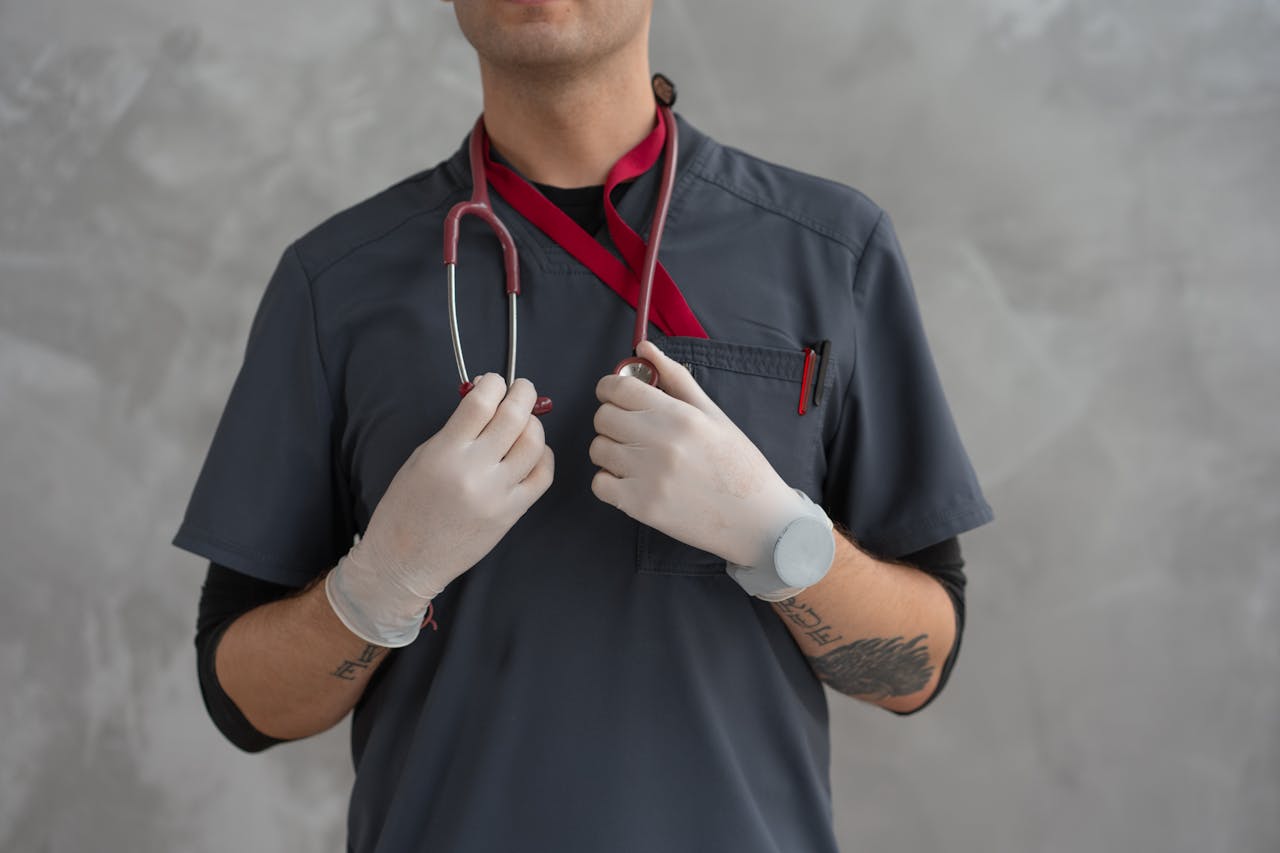
The healthcare technology sector is currently witnessing a tectonic shift. While the consumer wellness market is saturated with step-counters, the professional medical landscape is starving for efficiency. According to a 2024 AMA survey, around 53% of U.S. physicians report burnout symptoms, largely driven by administrative burdens and „pajama time”—the after-hours spent on electronic health records (EHR) documentation at home, often adding 1-2 extra hours nightly.
For founders looking for medical app ideas, the goldmine isn’t in helping patients track water intake; it’s in reclaiming the physician’s time. The global mHealth market is projected to reach $158.3 billion by 2030 (Grand View Research), but the highest ROI lies in clinical-grade tools that solve systemic friction within the hospital ecosystem.
Key Takeaways
- Burnout is the Catalyst: Solutions focusing on physician workflow and administrative automation are the highest priority for hospital procurement.
- Interoperability is Non-Negotiable: Any successful medical app must integrate seamlessly with HL7 FHIR standards.
- Niche over Broad: Specific diagnostic aids for high-stakes fields like oncology or radiology outperform general „health trackers.”
- Monetization Shift: Move from B2C subscriptions to B2B SaaS licensing for healthcare systems.

1. Clinical Workflow & Productivity Solutions
The modern hospital is a graveyard of inefficient communication. Doctors still use pagers and messy verbal handoffs, which contribute to serious medical errors—communication breakdowns play a role in up to 80% of handover mistakes and around 10-24% of hospital safety incidents overall. (THE HIPAA JOURNAL) Addressing this is the cornerstone of high-value medical app ideas.
AI-Driven Automated Scribe (The „Silent Resident”)
- The Problem: Physicians spend 2 hours on paperwork for every 1 hour of patient care.
- USP: Ambient listening technology that filters casual conversation to generate structured clinical notes directly into the EHR via voice.
- Monetization: Per-clinician monthly SaaS license or enterprise-wide deployment contracts.
Expert Insight: The „holy grail” here isn’t just transcription; it’s contextual coding. An app that can automatically suggest ICD-10 codes based on the recorded conversation increases hospital revenue by reducing billing denials.
Real-Time Surgical Coordination Hub
- The Problem: Operating Room (OR) delays cost hospitals roughly $62 per minute.
- USP: A synchronized „mission control” for surgical teams that tracks real-time prep status, sterilized equipment availability, and anesthesia readiness.
- Monetization: Performance-based pricing; taking a percentage of the costs saved by reducing OR idle time.
AI Twist: Use predictive analytics to forecast surgery duration based on the specific surgeon’s historical data, optimizing the entire day’s schedule automatically.

2. Advanced Diagnostic & Decision Support
Physicians are overwhelmed by data but starved for insights. With medical knowledge doubling every 73 days, no human can stay updated. These medical app ideas focus on augmenting the doctor’s diagnostic precision.
Differential Diagnosis (DDx) Engine for Rare Diseases
- The Problem: Patients with rare diseases often wait 5-7 years for a correct diagnosis.
- USP: A Bayesian-inference engine that cross-references obscure symptoms with genomic data and global case studies.
- Monetization: Premium „Deep Research” tier for specialists and partnerships with pharmaceutical companies for clinical trial recruitment.
Expert Insight: Accuracy is paramount. Ensure your MVP undergoes a peer-reviewed clinical trial. In the medical world, a white paper is your strongest marketing asset.
Smart Wound Assessment & Progression (SWAP)
- The Problem: Chronic wound care is subjective; different nurses measure and describe wounds inconsistently.
- USP: Computer vision that utilizes the smartphone camera to measure wound depth, area, and tissue composition (slough vs. granulation) with sub-millimeter precision.
- Monetization: Tiered pricing based on the number of active patient „cases” managed within the app.
AI Twist: Incorporate a „Predictive Healing” score that alerts the doctor if a wound is statistically likely to become necrotic based on pixel-level color changes invisible to the human eye.

3. Remote Patient Monitoring (RPM) for Critical Care
The „Hospital at Home” movement is the fastest-growing segment in healthcare. These medical app ideas bridge the gap between discharge and recovery, keeping patients out of high-cost ER beds.
Post-Op Cardiac Remote Telemetry
- The Problem: 30-day readmission rates for heart failure are a major financial penalty for hospitals.
- USP: High-fidelity ECG integration with immediate „Red Flag” alerts sent to the attending cardiologist’s dashboard if specific arrhythmia patterns are detected.
- Monetization: „B2B2C” model where the hospital prescribes the app and bills the insurance provider under RPM reimbursement codes (e.g., CPT 99454).
Expert Insight: Don’t build your own hardware. Partner with existing FDA-cleared wearables (like Apple Watch or BioIntelliSense) and focus your IP on the interpretation layer.
Market Landscape: Current Leaders
| Category | App/Company | Key Advantage |
| Scribe/AI | Nuance DAX | Deep integration with Epic EHR systems. |
| Diagnostic | VisualDx | World’s best dermatological image database for DDx. |
| Communication | Epic Haiku | Secure mobile access to hospital records for on-the-go doctors. |
Validation Guide: From Idea to Clinic
Before writing a single line of code for your medical app ideas, you must validate the clinical utility:
- The „Shadowing” Phase: Spend 40 hours in a clinic. Don’t ask what they want; watch what they struggle with.
- Compliance Audit: Determine if your app is a „Software as a Medical Device” (SaMD). If it provides a diagnosis, you need FDA/CE Mark clearance.
- The Integration MVP: Your MVP shouldn’t just be a standalone app; it should be a prototype that proves it can „talk” to a dummy EHR environment.
Stakeholder Mapping: Remember, the person using the app (Doctor) is rarely the person buying the app (CMIO/CFO). Your value proposition must satisfy both.
Conclusion
The next generation of successful medical app ideas will not be those that add more data to the pile, but those that distill data into action. For the entrepreneur, the path to success lies in the „unsexy” parts of medicine: the paperwork, the scheduling, and the monitoring. Solve the doctor’s exhaustion, and you will find a market ready to pay.
FAQ: Medical App Development
1. How long does it take to develop a medical app?
A compliant MVP typically takes 6-9 months, plus additional time for regulatory approvals if it involves diagnostics.
2. Is HIPAA compliance enough for medical apps?
No. HIPAA covers data privacy, but you also need to consider HITECH for security, and SOC2 for enterprise-level trust.
3. What is the most profitable medical app niche?
Currently, AI-driven administrative automation and specialized Remote Patient Monitoring (RPM) have the clearest path to reimbursement.
4. Do I need a doctor on my founding team?
Absolutely. Without a Chief Medical Officer (CMO), you will lack the clinical credibility needed for sales and regulatory filings.
5. How do medical apps make money?
The shift is toward B2B SaaS, where hospitals pay per user or per month, often funded by „Value-Based Care” savings.
6. What are the biggest risks?
Regulatory hurdles (FDA), lack of EHR interoperability, and low user adoption among overworked clinicians.
7. Can an app be considered a medical device?
Yes, if it is used for the diagnosis, cure, mitigation, treatment, or prevention of disease.
8. What is HL7 FHIR?
It is the global standard for exchanging healthcare information electronically. Your app must support it.
9. How do I get my app into a hospital?
Usually through a „Pilot Program” led by an internal champion (a senior doctor) who convinces the IT department to allow a trial.
10. Why do most medical apps fail?
They solve problems that doctors don’t actually have, or they make the doctor’s workflow slower instead of faster.